

AFBF Opposes Railroad Merge

Omaha-based Union Pacific’s proposed $85 billion merger with the Norfolk Southern is being questioned by the American Farm Bureau Federation (AFBF) as to whether it’s in the best interests of farmers and ranchers. “The Great Connection,” as called by the Union Pacific, would create the nation’s first transcontinental railroad, connecting 50,000 route miles in 43 states, 10 international interchanges, and 100+ ports. Railroads are vital for the transportation of agricultural commodities, inputs, and food products. According to the AFBF, farm and food products account for roughly 20% of total U.S. rail tonnage. “In 2023 alone, U.S. railroads carried more than 80 million tons of corn, 26 million tons of soybeans, and nearly 26 million tons of wheat, much of it originating in the Midwest and Northern Plains and moving toward coastal ports or major processing hubs,” said the AFBF.
The Union Pacific argues the merger “will transform the U.S. supply chain, enhance American competitiveness, and energize virtually every sector of the economy.” It says it will do this by reducing handoffs between railroads, converting 2 million truckloads from road to rail, expanding services in underserved areas, and reaching underserved areas with faster, end-to-end service. Yet history and the nature of railroad service make the AFBF skeptical that these benefits will be realized by farmers and ranchers.
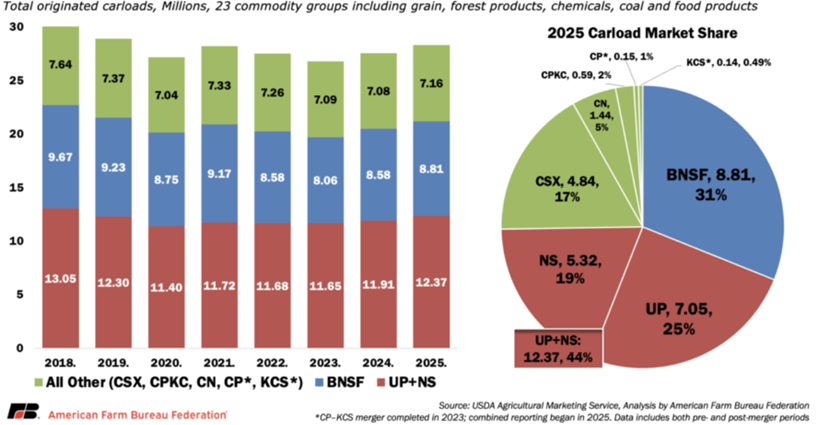
Railroad service is already concentrated in the U.S. With the merger, it will become more so (Figure 2). In 2025, the Burlington Northern Santa Fe railroad accounted for 31% of the carload market share; the Union Pacific, 25%; Norfolk Southern, 19%; and the CSX, 17%. Combined, the Union Pacific and Northern Southern would account for 44%. The AFBF is concerned that the combined share will give the merged entity increased market and pricing power over agricultural shippers. 95% of grain elevators are served by only one railroad. Meaning the demand for railroad transportation is inelastic. Agriculture shippers lack viable alternatives, like barge or truck. Absent competition, agricultural shippers rely on regulatory authorities to keep rates in check. Otherwise, rising rates are absorbed by producers and shippers through lower prices. The railroads argue efficiencies gained will result in lower rates for shippers. The AFBF counters that there is little incentive for the railroads to share any efficiencies with shippers. Also, historically, efficiencies gained through railroad mergers have not been realized in lower rates.
Figure 2. Concentration in U.S. Rail Markets
The Union Pacific and Norfolk Southern filed their merger application with the Surface Transportation Board (STB) but the STB rejected it as incomplete. In response, the railroads said they will submit a revised application by the end of the month. If accepted, the merger will undergo a formal review presenting the opportunity for public input.
The merger creates an interesting dynamic for Nebraska agriculture. The Union Pacific maintains a huge footprint in Nebraska with 8,300 employees, 1,066 miles of track, and the Baily Yard in North Platte. Between 2019-2023, the company says it invested $1.5 billion in infrastructure in Nebraska. Benefits which accrue to the company from a merger would also accrue in part to the state’s economy. Yet, the AFBF says there are risks to agriculture and is concerned any benefits to the railroads could come at the cost of farmers and ranchers. More on the AFBF’s concerns can be found at: https://www.fb.org/market-intel/proposed-rail-merger-comes-at-farmers-expense