

Beef Trade Grows


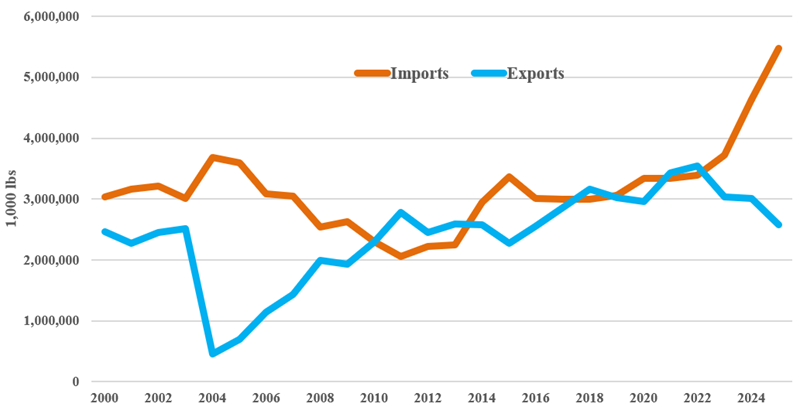
U.S. beef imports were higher, beef exports were lower, and overall U.S beef trade with the rest of the world grew. That’s the way it was with beef trade in 2025. The USDA Economic Research Service reported U.S. beef shipments overseas last year equaled 2.51 billion pounds, down 12% from 2024 (Figure 2). The value of beef exports totaled $9.3 billion, off 11%. In contrast, U.S. beef imports rose 18% to 5.47 billion pounds. Total U.S. beef trade was nearly 7 billion pounds. Figure 2 plots U.S. beef trade by volume since 2000. Exports typically consist of high-value muscle cuts, while imports are largely trimmings intended for use in ground beef. Over the past two years, beef imports have nearly doubled in volume, reaching record highs. In fact, imports exceeded exports last year by more than 2 times, a level not seen since 2004 and 2005 after the BSE detection. More imports and less exports are expected again in 2026.
Figure 2. U.S. Imports/Exports of Beef, 2000-2025 (1,000 lbs.)
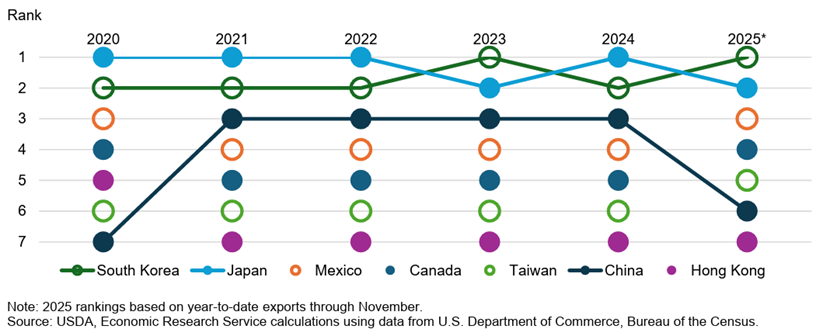
Purchasers of U.S. beef last year were led by South Korea with 627 million pounds, Japan at 608 million pounds, and Mexico with 298 million pounds. But despite the impressive volumes, shipments to the top six markets were off compared to 2024, with the biggest drop seen in China. China fell from being the third-largest market in 2024 to the sixth-largest last year. Shipments to China were off 67%, or 320 million pounds. The fall was due to trade frictions between the U.S. and China and the non-renewal of export registrations by China for U.S. suppliers.
Figure 3. Destinations for U.S Beef Exports (million pounds)
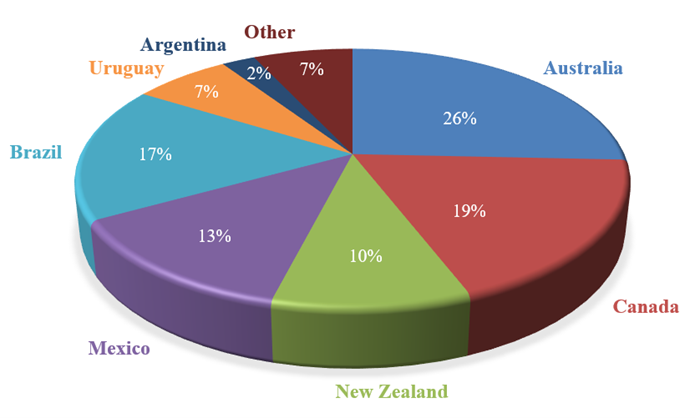
Australia, Canada, Brazil, Mexico, and New Zealand were the largest suppliers of beef to the U.S. in 2025 (Figure 4). Australia accounted for 26% of total imports. Canada and Brazil accounted for 19% and 17%, respectively. Shipments from most suppliers rose, the exceptions being Canada and New Zealand. Beef imported from Australia grew 26%, and those from Brazil surged 35%. Both countries saw growth rates above 60% in 2024. Argentina’s beef shipments grew 29% last year, but the country only accounted 2% of U.S. total imports.
Figure 4. Sources U.S. Beef Imports (million pounds)
Last year’s surge in beef imports and drop in exports resulted from lower U.S. beef production and higher beef prices. These factors, coupled with strong domestic consumer demand, pushed imports considerably higher and pressured exports lower. The trends will continue in 2026. The USDA projects the volume of U.S. beef exports will drop more than 5% while beef imports are expected to rise 3%. And with U.S. cattle supplies continuing to remain tight and consumer demand strong, the trends will continue into 2027 as well.