

EPA Increases Biofuels Obligations


In March, the Environmental Protection Agency (EPA) released its renewable fuel volume obligations (RVOs) for 2026 and 2027 under the Renewable Fuel Standards (RFS) program. In a pleasant surprise for agriculture, the figures were larger than expected and considered bullish, especially for soybeans. Bio-based diesel (BBD) volumes, of which soybean oil is a primary feedstock, were set at 9.07 billion renewable identification numbers (RINs) for 2026 and jump to 9.2 billion in 2027. RINs are used by the EPA to track renewable fuels with a number assigned to each physical gallon of renewable fuel produced or imported. Kevin Van Trump said the volumes translate to roughly 5.4-5.5 billion gallons BBD, up sharply from the 3.35 billion gallons set last year. The EPA also said that starting in 2028, foreign fuels and feedstocks will receive just half the RIN value compared to American-based products, giving a leg up to domestic production. Finally, the 15-billion gallon conventional biofuel (ethanol) volume obligation will remain in place for 2026 and 2027. 70% of volumes waved through small refinery exemptions (SREs) provided to small refineries to mitigate economic hardships will be reallocated to other refineries.
Figure 1. RIN Generation and RVOs, 2024-2027
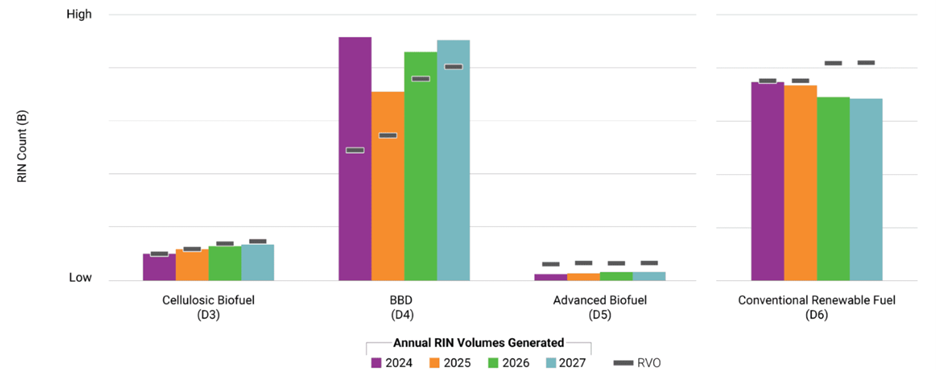
The RVOs determine the size of the market for BBD and renewable fuels. Because it costs more to produce BBD than conventional diesel, the RVO acts as both a floor and a ceiling for the market. The EPA estimates that BBD production and use will increase by over 60% compared to 2025 volumes to meet the requirements. Currently, there is the capacity in the U.S. to produce approximately 7 billion gallons. According to Van Trump, BBD represents more than 10% of the value of every bushel of soybean produced. The price of soybean oil as of this writing is up 50% since the announcement.
Nebraska is well positioned to capture a portion of this increased usage of soybean oil with two new soybean processing facilities coming online last year in Norfolk and David City. The two plants, along with existing facilities in Lincoln, Fremont, and Hastings, pushed Nebraska’s crush capacity to 234 million bushels, according to the Nebraska Soybean Board, equal to about 70% of soybean production in the state. Scott Geralt, chief economist for the American Soybean Association, said in a recent webinar hosted by the University of Nebraska Center for Agricultural Profitability that a soybean crushing plant can add anywhere from 10-25 cents to the soybean basis, depending on local market conditions.
The EPA says the renewable fuel obligations are the highest in the history of the RFS program. The rule should help support soybean demand in the face of faltering foreign markets. The rule should also provide a continued steady demand for corn for ethanol production.