

Exports A Positive Story for Agriculture


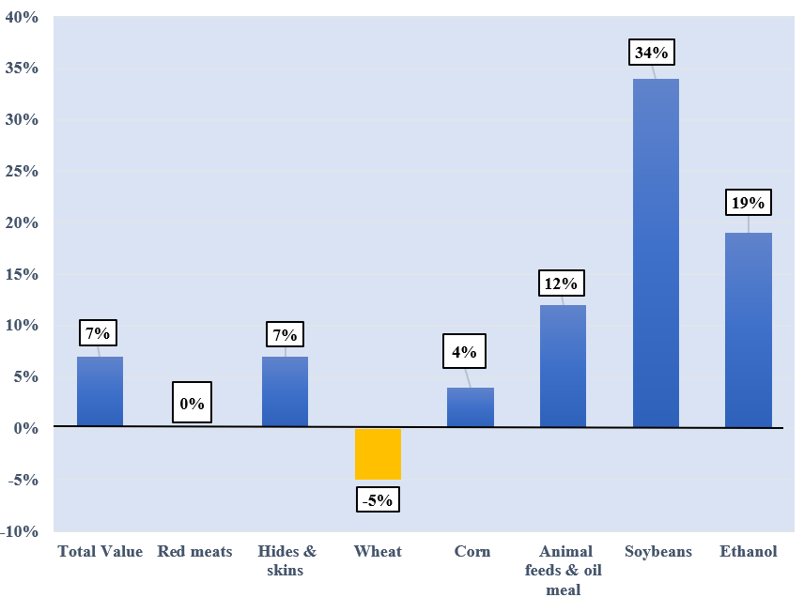
The value of U.S. agricultural exports through the first half of the year, $91.8 billion, was 7% higher compared to the same period in 2025. The growth occurred across almost all commodities. Figure 1 shows the percentage changes in U.S. exports for key Nebraska exports in the first six months compared to the same period in 2025. Wheat was the only commodity to see a decline, down 5%. Exports of red meats (beef, pork, and lamb) saw no change. Otherwise, all other commodities saw gains led by soybeans, up 34%, followed by ethanol, up 19%.
Figure 1. Percent Changes in the Value of U.S. Ag Exports, 2026 vs. 2025 YTD
China’s return to the market fueled the increase in soybean exports. Exports to China since January were up almost 5 million metric tons compared to last year. Corn exports were a bit higher this year too, but not on the strength of its two largest buyers, Mexico and Japan. Purchases by both countries were down moderately in the first half of the year. South Korea, Columbia, and Venezuela, though, picked up the slack. The U.S. Meat Export Federation (USMEF) said the value of beef exports fell 4% through July, primarily due to a decline in volume of 9%. Reduced U.S. beef production and the continued absence of China from the market contributed to the decline. The value of pork exports increased 3% to $4.22 billion on increased exports to Central America, Dominican Republic and Japan.
The USDA projects U.S. agricultural exports to be steady to slightly higher in the coming months. Corn exports are projected to be modestly higher due to increased volumes and higher prices. Karen Braun of Zaner Ag Hedge reported last week corn export inspections hit 75 million bushels in the prior week, the largest for the same week in 44 years of data and the third consecutive week of weekly records. And FarmPolicy says inspections for the marketing year beginning October 1 were up 26% compared to the previous year. Beef exports are projected lower on lower volume. Soybean exports are also projected to be lower. China remains the key for soybean exports. The country appears to be meeting its purchase pledge, but its economy is slowing, Chinese consumers are eating less pork, and the property sector is struggling straining local government budgets. These developments could slow imports.