Land Prices Outpace Rental Rates


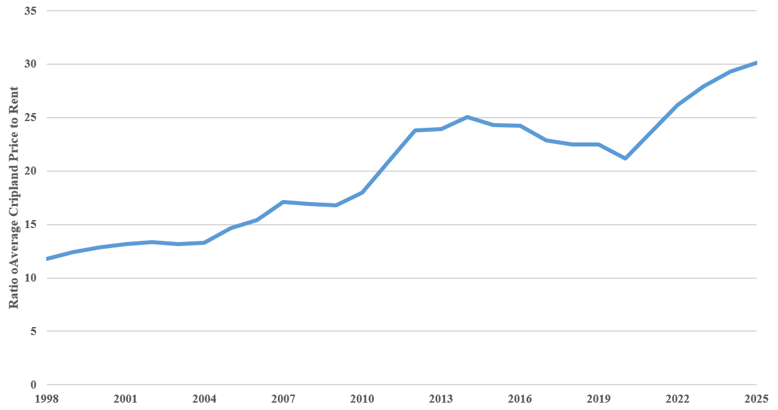
Increases in the price of cropland have far outpaced those in rental rates over the past few decades. An analysis by agricultural economists at Ohio State and the University of Illinois showed the ratio of the average price of cropland in the U.S. compared to average cash rental rate nearly doubled since 1998 (Figure 1). The ratio rose from 20 in 1998 to 36 in 2025, meaning the average cropland price in 2025 was 36 times the average cash rent. Carl Zulauf and Bruce Sherrick said that if the ratio had remained at 20, the current average price of cropland would be 44% less than its present price. Nebraska has experienced a similar rise, more than doubling between 1998 and 2025 from 12 to 30 (Figure 2).
Figure 1. Cropland Price to Rent Ratio, U.S.
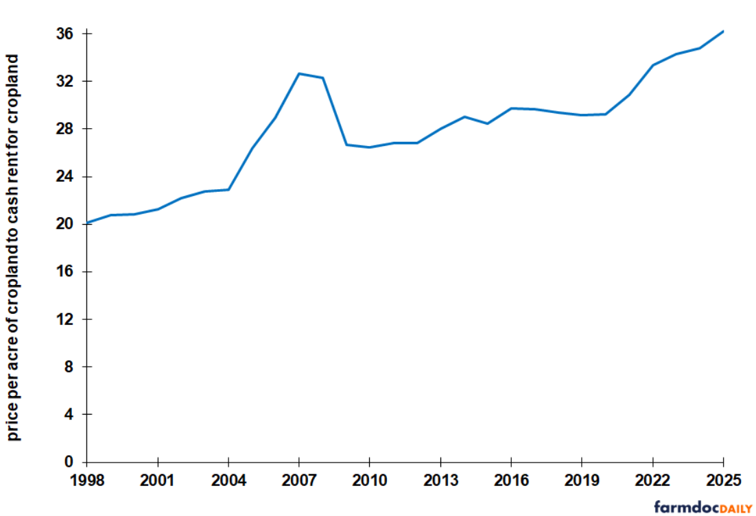
Figure 2. Cropland Price to Rent Ratio, Nebraska
Zulauf and Sherrick searched for reasons behind the hefty rise in the ratio but came away empty handed. They surmised the growth might have resulted from the implementation of the Renewable Fuels Standards (RFS) or relatively low interest rates and inflation. However, a statistical analysis showed the factors were not statistically significant in explaining the growth. Analysis of other potential explanations, like farm program payments, also failed to explain year-to-year changes in the ratio.
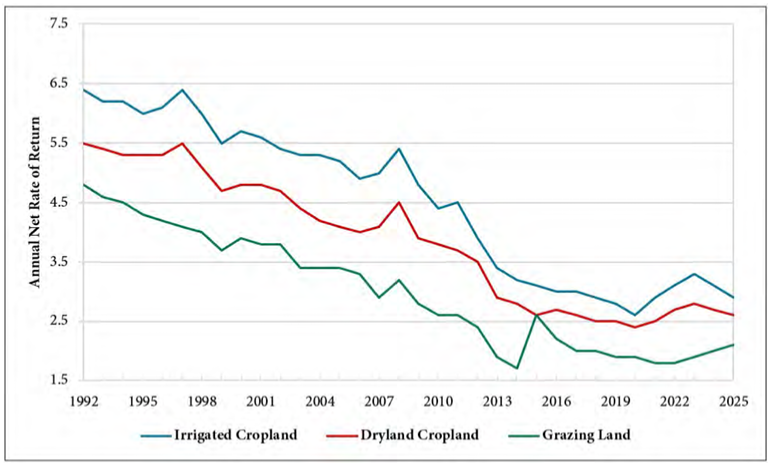
And while the cropland price to rent ratio has seen significant growth, its inverse, the rate of return to land has declined. Figure 3 shows the estimated annual rates of return to different classes of land since 1992 in Nebraska from the annual Nebraska Farm Real Estate Market report. As can be seen, rates have declined from a range between 4.5%-6.5% in the early 1990s to 1.5%-3.0% today.
The widening of cropland prices to cash rent ratio is a conundrum. Land prices and rents are influenced by many factors. Interest rates, inflation, farm economics, and returns from alternative investments play a role. Given land’s large share of U.S. farm assets (roughly 80%), Zulauf and Sherrick argue more research is needed to identify the factors underlying the increasing agricultural land-rent ratio and understand the implications for landowners and producers.
Figure 3. Net Rate of Returns to Land in Nebraska