

Rebuilding After the Flames
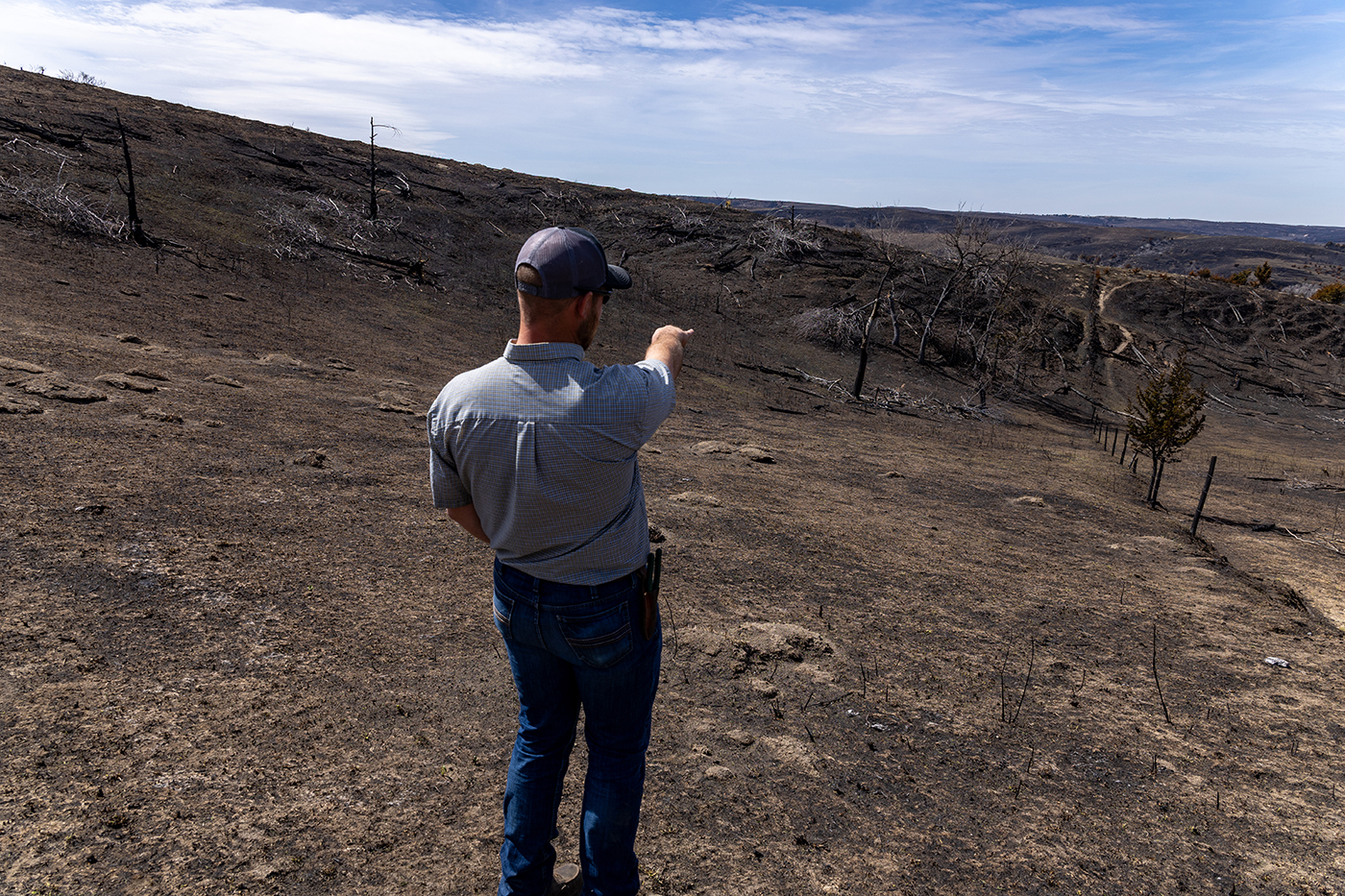
Nebraska Farm Bureau visited with Frontier County Farm Bureau member and rancher Collin Thompson, who reflected on the wildfire devastation and the role of the Nebraska Farm Bureau Disaster Relief Fund.
Q: Collin, can you describe the scope of the wildfire that impacted your area?
A: We’ve never had anything close to a fire of this size. Estimates put it at around 130,000 acres in the immediate area, and when you include the lowest canyon areas, it’s closer to 340,000 acres. That’s roughly 40% of the area completely burned.
Q: What did the land look like after the fire moved through?
A: There are areas where you see nothing but skeletons of trees, charred grass, burned hillsides, just gopher mounds left on the hills. It’s almost like a desert now. It’s disheartening. The fire took all the grass. There’s nothing left, and underneath it’s incredibly dry. If we don’t get moisture soon, there’s a real possibility we won’t pasture at all this year because there’s just not enough to bring cows up to.
Q: Where were you when the fire started and how did you first learn about it?
A: The day it started, we were busy calving. We were getting a lot of calves a day. Next thing I know, my wife texted me a screenshot she’d seen on Facebook saying there was a fire moving south of Maxwell. With the wind direction and the conditions that day, I knew it might not be good.
Q: What actions did you take as the fire approached your operation?
A: I headed out to get a grass rig we use for prescribed burns, hoping I could help fight the fire or save something. A neighbor told me it was still a few miles away, but by the time I got here, it was already north of us and moving through our ground incredibly fast. I watched it jump the road. I tried to put out a spot fire across the ditch, but when I looked up, it was already rolling through the hills behind me.
Q: That sounds incredibly dangerous. What were conditions like while fighting the fire?
A: When I got up here, I was the only one on that road — my own hose man, trying to run the rig myself. These conditions are tough because you can’t just drive around in these pastures without risking getting trapped. If a fire gets behind you and you don’t have an escape, it’s a serious situation. Our main yard is about 10 miles away, and it was headed that direction fast. If the wind hadn’t changed that night, the outcome could have been much worse.
Q: How did those first few days after the fire feel?
A: It was the most surreal few days I’ve ever been a part of. It didn’t seem real. Between the radio chatter, working with fire departments, and trying to put in lines and create a perimeter we could protect, especially with another extremely windy day forecast, it was nonstop. Half the battle was getting it out, and the other half was trying to create a perimeter that could hold it with high winds forecasted.
Q: What kind of support have you and your family received since the fire?
A: It brings tears to my eyes when I see the amount of hay donations that have come in. There are a lot of very generous people in this world. Our family has had so many people reach out and offer help. We’ve taken some donations, contacted our insurance company — knowing insurance likely won’t cover many of the fence losses — and we’ve even had a private donor step up to help those facing significant losses.
We will receive assistance from FSA through programs including, LFP, ELRP, ELAP and ECP to assist in rebuilding fences, and LIP for those who unfortunately had livestock death loss. The NRCS office can help with grazing deferment and seeding costs for supplemental feed.
Q: How does the Nebraska Farm Bureau Disaster Relief Fund help in situations like this?
A: The Disaster Relief Fund is critical. It helps fill the gaps where insurance can’t, things like fencing, feed and immediate needs after a disaster. When you’re staring at miles of burned pasture and destroyed infrastructure, that kind of support matters. It helps producers keep going when the losses feel overwhelming.
Q: As a member of Frontier County Farm Bureau, what keeps you moving forward?
A: I guess that’s part of being in agriculture. You have to have an unwavering amount of optimism that the future is going to be better than it is today. Even after something like this, you keep going, you rebuild and you believe that better days are ahead.
To learn more about how the Nebraska Farm Bureau Disaster Relief Fund supports farm and ranch families affected by natural disasters, or to make a contribution, visit NEFB.org/disaster.