

Regions Vary in Amount of Pre-Booked Fertilizer


One of the bigger questions facing crop producers as planting season begins is the cost and availability of fertilizer. The surge in fertilizer prices and concerns over availability since the beginning of the war in the Persian Gulf have been well documented. According to the American Farm Bureau Federation (AFBF), countries in Persian Gulf region account for roughly 49% of global urea exports and 30% global ammonia exports. Thus, the conflict and supply disruptions in the region affect prices and supplies in global markets. Tidbits noted last week that according to Charlie Bilello the price of fertilizer has increased 31% and the price of urea 48% since the start of the war.
Surging fertilizer prices will mean higher costs this year for farmers. Fertilizer costs make up around 37% of the operating or variable cost of corn production according to Kevin Van Trump citing USDA data. Many producers pre-booked fertilizer to manage prices and lock in supplies. Farmers who did so could minimize the extra costs while those who didn’t are more exposed to the price hikes. National Corn Growers Association survey of corn farmers in March found 60% had pre-booked their nitrogen fertilizers and 64% had booked their phosphate fertilizer needs. An AFBF survey conducted earlier this month found regional and commodity differences among farmers in pre-booking fertilizer.
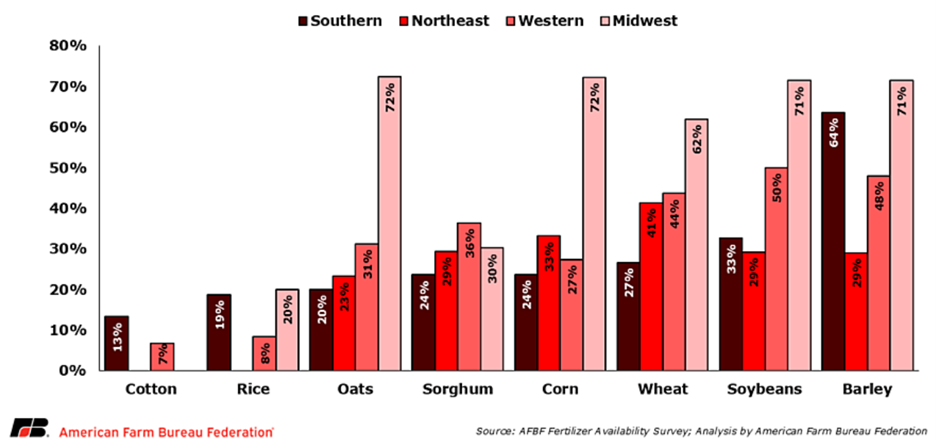
According to the AFBF survey, roughly two-thirds of farmers in the Midwest, including Nebraska and the Corn Belt, pre-booked fertilizer for this year. In contrast, only 19% of farmers in the South pre-booked, 30% in the Northeast Region, and 31% in the Western Region. Differences in forward purchases of fertilizer were also found between commodities produced. AFBF found, “Nearly half of soybean producers reported pre-booking fertilizer (49%), followed by barley (47%), corn (44%), and wheat (42%) growers.” And the surveys showed, “Lower pre-booking rates among cotton (13%) and peanuts (9%).” There were regional differences among producers within commodities too. Midwest producers of corn, oats, wheat, soybeans, and barley far outpaced fellow producers in other regions in pre-booking fertilizer.
Figure 1. Share of Farmers Who Pre-Booked Fertilizer
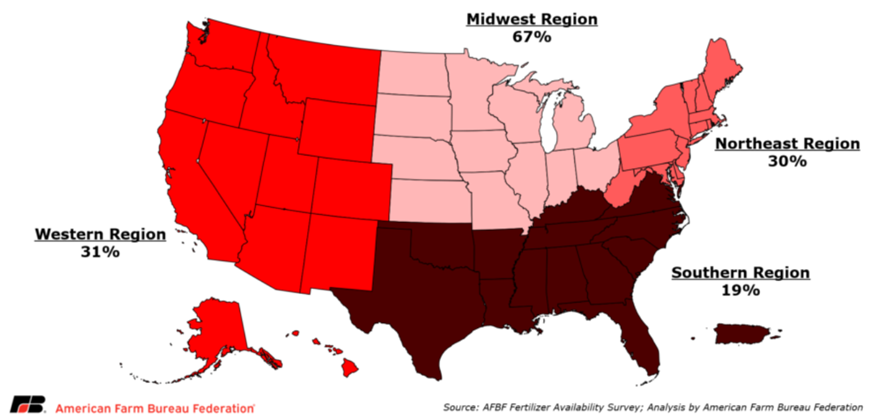
Figure 2. Share of Fertilizer Pre-Booked by Crop & Region
Why the differences? Farm size and crops produced could explain a portion of the differences. The survey showed larger farms were more likely to pre-book fertilizer as opposed to smaller farms. Perhaps farms in the Midwest are larger than those located in other regions. Differences in fertilizer management practices in regions and in the production of cotton, rice, and peanuts, primarily grown in the South, versus practices in the production of corn, soybeans, and wheat, primarily grown in the Midwest, might also contribute to fertilizer purchasing decisions and timing.
Whatever the reasons, farmers in the South will be most impacted by the volatility and higher fertilizer prices and those in the Midwest will be least affected. When the end to the conflict will come is uncertain. Yet even if hostilities cease soon, it will take time for markets to return to normalcy. Farmers will adapt. They will change crops to less fertilizer-intensive ones, they will use less fertilizer, and all will watch availability closely. Or crop prices could move higher to help mitigate the rising costs. It’s another uncertainty and headache for crop farmers already facing a trying year.