Tariffs Increase Fertilizer Costs


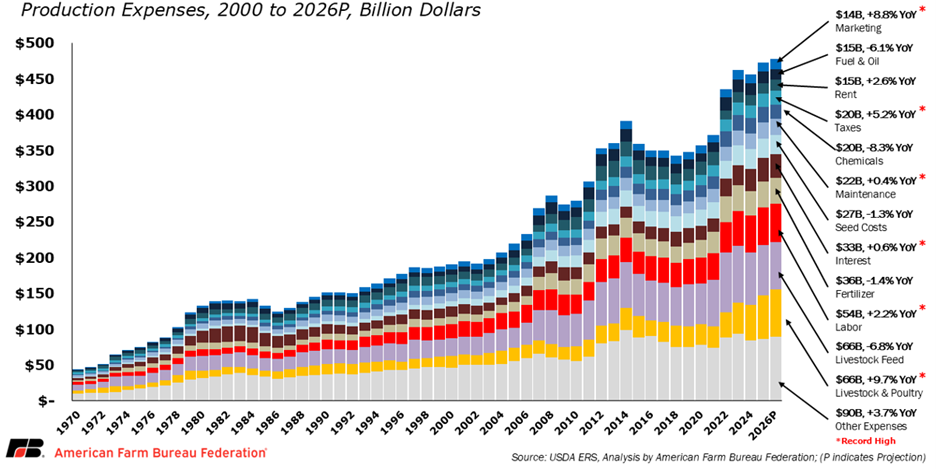
Low commodity prices and high input costs have contributed to negative profit margins and declining farm credit liquidity. Abygail Petersen, economist with Nebraska Farm Bureau, says the cost of one input stuck out last year—fertilizer. With last year’s tariffs and trade disruptions, the impact of tariffs on fertilizer prices was the subject of speculation. Petersen’s review of a North Dakota State University (NDSU) study examining the cost of tariffs on fertilizers in 2025 found the tariffs added to farmers’ fertilizer costs.
According to Petersen, the NDSU study found tariffs levied under the International Emergency Economic Powers Act (IEEPA) raised around $958 million in revenue from agricultural imports from February through October of last year, roughly $110 million coming from the tax on fertilizers. Comparing Canadian fertilizer prices, which had no tariff, to U.S. fertilizer prices which were subject to tariffs, Peterson says the study found the differences in prices between the U.S. and Canada between August 2024 and August 2025 amounted to pass-through rates for DAP (diammonium phosphate) of 342% for the spot price and 156% at the retail level when measured against the tariff rate of 8%. MAP (monoammonium phosphate) and urea also saw prices well above tariff rates (Figure 1). The NDSU study also found the cost of the tariffs on fertilizers were paid by people buying the final product—farmers and importers.
Figure 1. Pass-Throughs of Tariffs to Fertilizer Prices
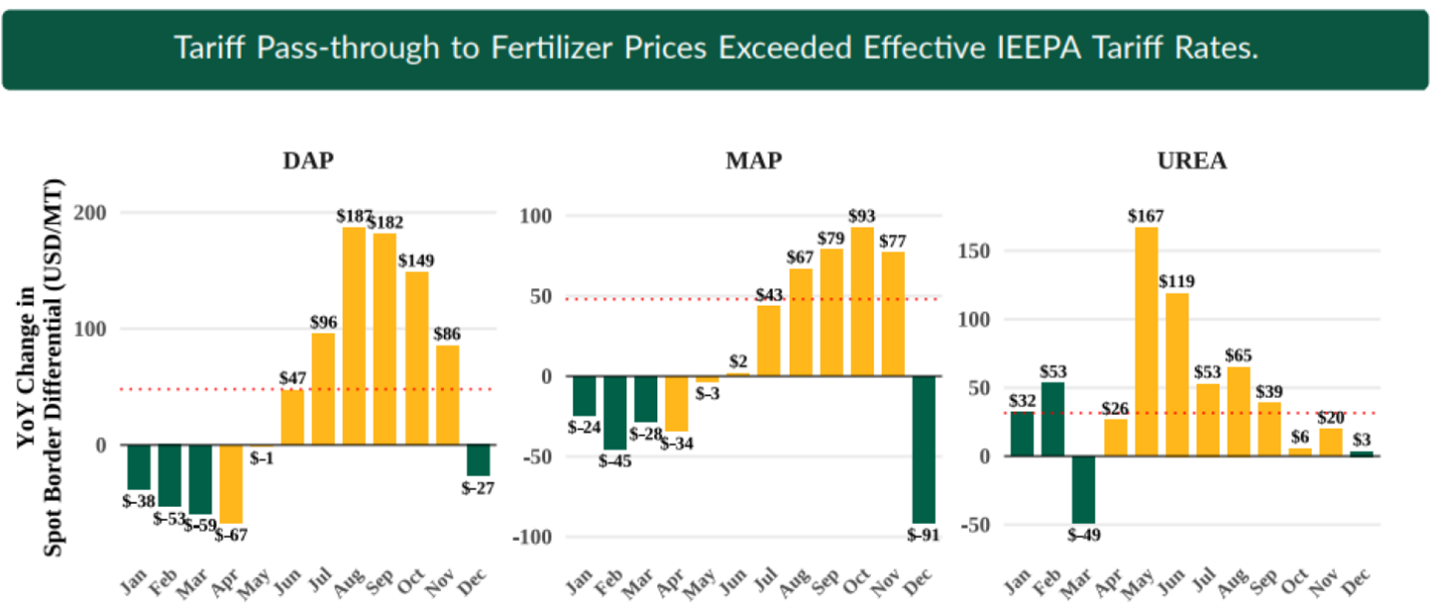
Figure 2. U.S. Farm Production Expenses