Wet, Slow & Sloppy

Wet weather is putting the brakes on harvest this year. Farmers on X, formerly Twitter, lament the lack of progress, but also show that they are taking it in stride with a few humorous AI-generated images of combines equipped with floating devices attempting to harvest. Areas of Nebraska have received 2-6 inches of rain above normal in September. Areas in extreme southeast Nebraska have received more than 8 inches in excess of average. And these figures do not account for last week’s deluge.
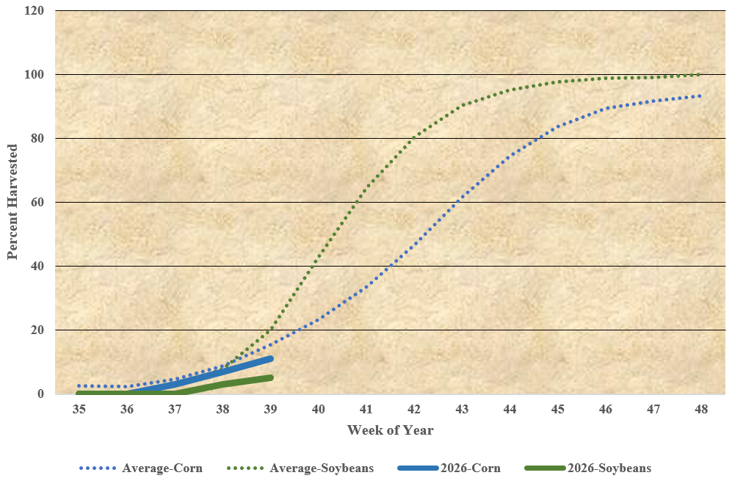
Needless to say, progress on harvest is behind what it normally would be at the beginning of October. Figure 1 plots the average weekly progress for corn and soybeans from 1996 to 2026 (dashed lines). The weeks correspond roughly from September 1 through November 30. This year’s progress is plotted with solid lines. Harvest usually begins early to mid-September and by month’s end, on average, 15% of corn and 20% of soybeans are harvested. This year, as of September 27, just 11% of the corn and only 5% of soybeans have been harvested. And there certainly was no catching up last week.
Figure 1. Nebraska Corn & Soybean Harvest Progress
There is good news, however. Eric Hunt, Assistant Extension Educator of Agricultural Meteorology for the University of Nebraska, expects conditions to improve. “I do think there is going to be a nice open window for about two weeks for people to get some stuff done,” Hunt said on KRVN. He also said the window may be limited and the chances for significant precipitation will increase again in later October.
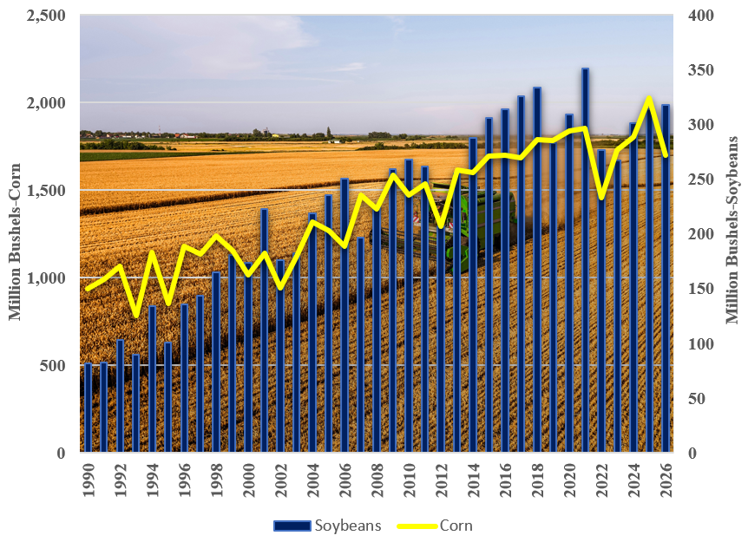
The USDA National Agriculture Statistics Service projects Nebraska farmers will harvest 9.6 million acres of corn, 5.3 million acres of soybeans, and 2-3 million acres of other crops. Production of corn is pegged at 1.7 billion bushels, down 16% from last year, and soybean production at 317 million bushels, up 1.2%. Neither is a record but are still relatively high from a historical perspective. The persistent wet weather, though, is starting to raise production and crop health concerns. Disease, weaker stalks, pod shattering, and fears strong winds could flatten crops are growing concerns. Operating machinery in wet, sloppy, muddy fields is challenge too. The delayed and sloppy harvest are just the latest challenges in 2026 for crop producers. The year is likely to go down as a memorable one, but not for the right reasons.
Figure 2. Projected Nebraska Corn & Soybean Production