

Year of the Woman Farmer

The United Nations declared this year as the International Year of the Woman Farmer. The declaration is meant to spotlight the essential roles women play across agrifood systems, from production to trade. In light of the pronouncement, Tidbits this week spotlights women producers in Nebraska.
Female producers on Nebraska farms rose from 19,851 to 26,234 between 2012 and 2022, an increase of 33%. Total producers in the state also increased 7%, but if not for the growth in females on farms, total producers would have fallen as male producers fell 1%. In 2022, females accounted for one-third of Nebraska producers; 32% of female producers, the largest share, were involved on farms larger than 500 acres; and farms with participating female producers accounted for 36% of the market value of agricultural products sold. The ages of female producers matched those for all producers. For example, 14.7% of female producers were between the ages of 45-54 years; 14.8% of all producers fell in the same range. And 37 % of female producers were 65 years or older, the same as for all producers.
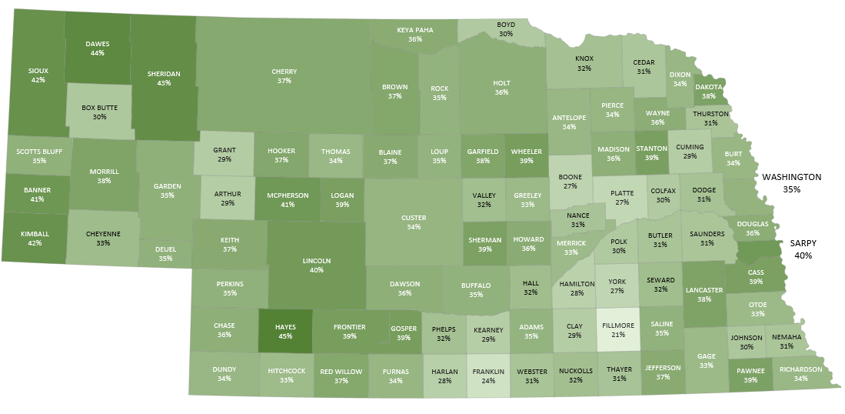
Figures 1 and 2 highlight female producers in counties. Figure 1 shows the number of female producers in each county in 2022. Figure 2 shows female producers as a share of total producers. The number of female producers ranged from 37 in Grant County to 1,202 in Lancaster County. Counties with more land area (i.e. Holt, Custer, and Lincoln), or greater populations (Lancaster and Gage), tended to have more female producers. When looking at females as a share of total producer numbers, a different picture emerges. Females as a share of total producers ranged from 21% in Fillmore County to 45% in Hayes County and exceeded 40 % in seven counties. These counties were concentrated in the western part of the state with six of them in the Panhandle.
Figure 1. Female Producers by County, 2022
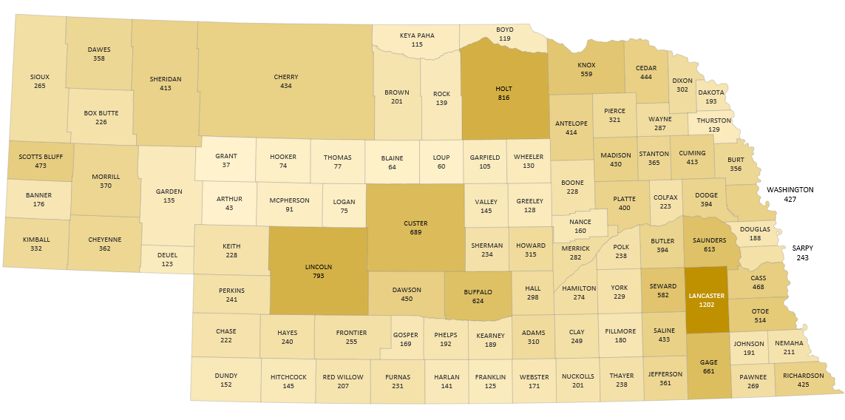
Figure 2. Female Producers as a Share of Producers, 2022
Tiffany Heng-Moss, vice chancellor for the Institute of Agriculture and Natural Resources at the University of Nebraska, when asked why it is crucial to have women working in agriculture said, “The strength of Nebraska agriculture depends on a wide range of talents and expertise working together to solve challenges and seize new opportunities. Women play an essential role in that success: they are helping write its future.” Heng-Moss went on to say women are leading farming operations, advancing scientific discoveries, educating future generations, and shaping public policy. The latest census figures evidence Heng-Moss’s statement at least in terms of production agriculture. And the growth in female participation in agriculture will no doubt continue. Greater female participation in Future Farmers of America and increased interest by women in college degrees related to agriculture are spurring more interest in careers in agriculture. Females in agriculture will indeed help write the future.