Beef Cow Numbers Slip


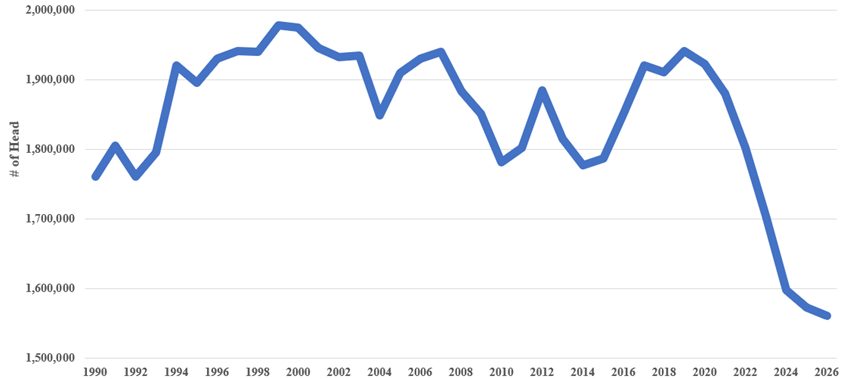
Nebraska’s beef cow herd numbered 1.56 million head on January 1, down 1% from last year according to the cattle inventory released Friday by the USDA National Agricultural Statistics Service. One must go back to at least 1960 to find fewer beef cows in the state. Nebraska’s herd is down 20%, or 381,000 head, since the most recent peak in 2019. In comparison, the U.S. herd is down 13% over the same period. The largest Nebraska herd on record occurred in 1975 when 2.37 million cows grazed the state’s verdant pastures, the same year the Vietnam War ended and Queen released “Bohemian Rhapsody.” This year marks the seventh consecutive year cow numbers have declined. The state’s herd remains fourth in terms of size trailing Texas, Oklahoma, and Missouri. Texas and Missouri also saw declining cow numbers while Oklahoma’s were the same as last year.
Figure 3. Beef Cow Inventory in Nebraska,1990-2026
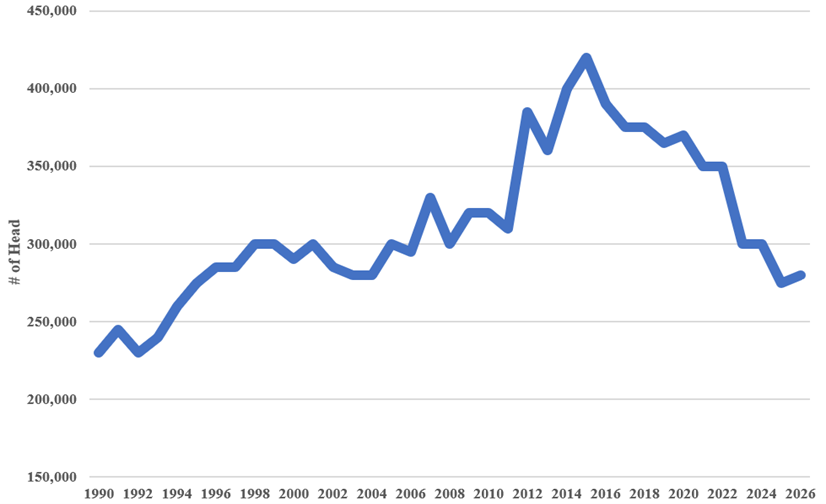
U.S. beef cow numbers were down too, off 1%, at 27.6 million. Replacement heifers nationwide numbered 4.71 million head, up 1% from 2025. Replacement heifers in Nebraska were up 5,000 head to 280,000, up 2% (Figure 4). Nationwide, the calf crop last year was 32.9 million head, down 2%, and the smallest since 1941 according to Derrel Peel, a livestock economist at Oklahoma State University. Nebraska’s calf crop was 1.5 million head, down 1%.
The inventory shows replacement heifer numbers ticking higher. But they also confirm the speculation that scant heifer retention or herd expansion is occurring. Many factors play into ranchers’ decisions whether to expand herds. Calf prices, feed costs, profitability, drought conditions, future retirement plans, and market uncertainties all weigh on ranchers’ minds. A livestock economist at the University of Arkansas attributes the lack of retention to “structural constraints, input costs, and financial considerations.” He also says these factors “will likely delay a rapid recovery in beef cow numbers.” Derrel Peel, a livestock economist at Oklahoma State University, said the January Cattle on Feed report showed heifers as a percentage of feedlot inventories increased to nearly 39%, the highest level in the past year suggesting limited heifer retention. The same report showed several states reporting fewer heifers on feed compared to last year, but Nebraska reported an additional 10,000 heifers on feed.
Clearly, ranchers have decided expansion isn’t right for them at present. Tight cattle supplies and robust consumer demand for beef have led to record high cattle prices. Most market observers expect prices to trend higher again this year. Will 2026 be the year ranchers begin to build herds? Only ranchers know.
Figure 4. Heifers Held for Replacement in Nebraska, 1990-2026