Diesel Prices Steady?


Fuel costs typically account for 3% of total farm expenditures. But fuel costs, especially diesel, can affect the costs of other farm inputs too. An American Farm Bureau Federation economist said in 2022 that the cost of diesel is made up of four parts: 49% is based on crude oil, 28% is refining, 12% is costs associated with distribution and marketing, and 11% is taxes. As for oil prices, the U.S. Energy Information Administration (EIA) forecasts oil production this year will exceed demand. Thus, Brent crude oil prices are forecast to fall from an average of $69/barrel last year to $58/barrel this year. The futures market, like the EIA forecasts, suggests steady-to-slowly declining prices over the coming months. The current price for Brent crude is around $67.50/barrel.
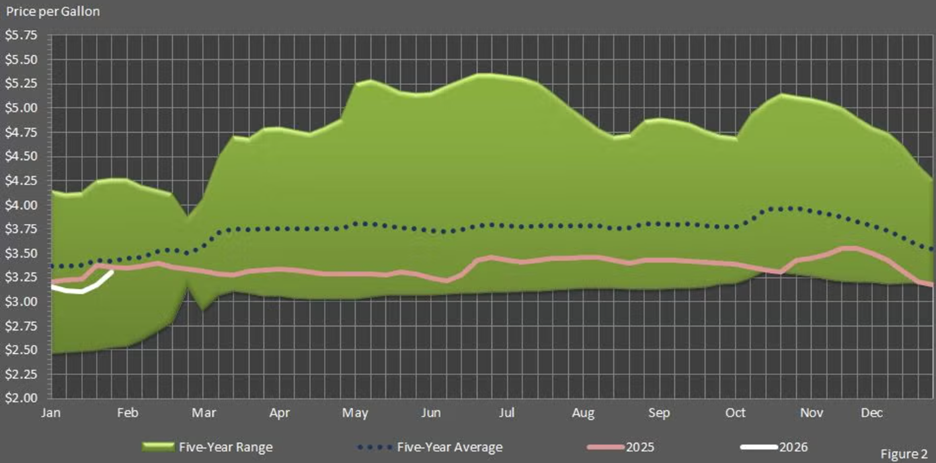
Gregg Ibendahl, an agricultural economist with Kansas State University, developed a diesel price forecasting model based on oil futures prices and expectations for diesel-to-gasoline premiums. The model forecasts diesel prices will be steady this year, much like last year. As noted above, oil prices are expected to decline, and diesel-to-gasoline premiums are expected to decline into the summer before rising in the fall.
So, farmers could see steady or perhaps lower diesel costs in 2026. Diesel prices in Kearney in early February averaged $3.30/gallon, remaining basically the same as last year. The UNL Center for Agricultural Profitability used $2.70/gallon when developing its crop budgets this year. However, prices should be monitored. Ibendahl says diesel stocks entered the year below the typical range seen during the past five years because of declining refinery capacity. Moreover, oil prices can be volatile due to geopolitical risks in the Middle East and the war in Ukraine. Any capacity hiccups or volatility in oil prices could lead to spikes in diesel prices.
Figure 3. Nebraska Weekly Diesel Prices