

Nebraska Farm Bureau Members Set Policy on Key Issues and Elect Leaders at Annual Meeting and Convention
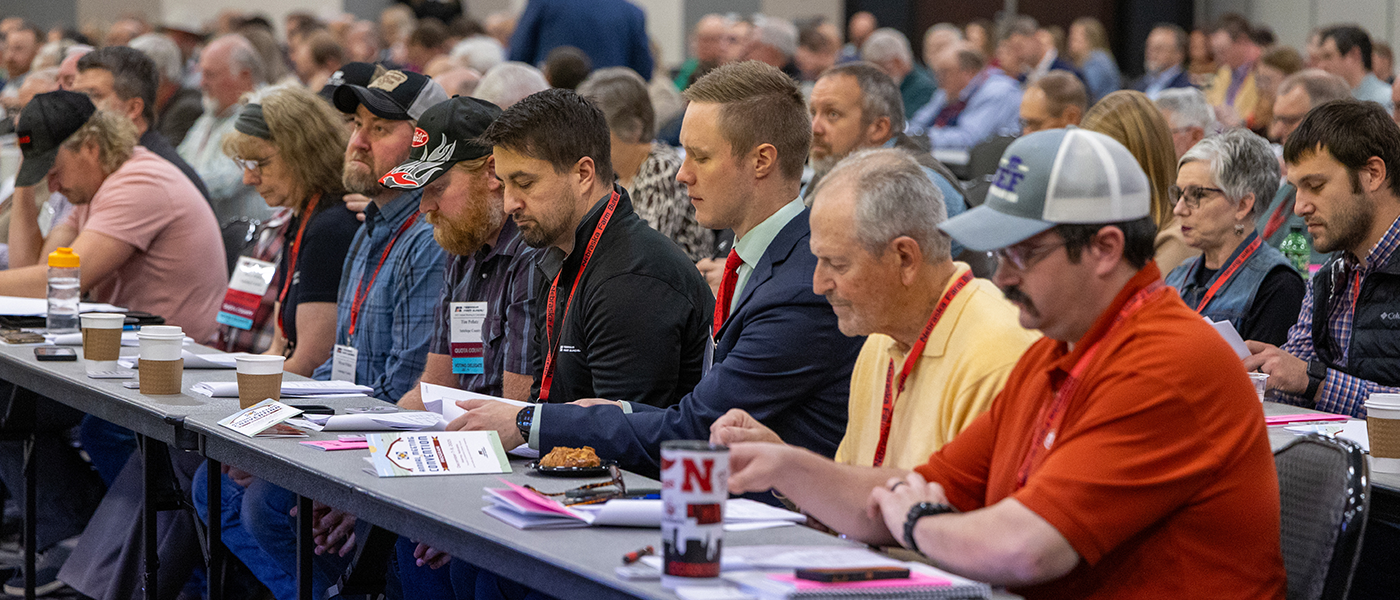
Delegates representing farm and ranch families from all 93Nebraska counties outlined key agricultural policy priorities and electedleaders for Nebraska Farm Bureau (NEFB) as part of the organization’s 108thAnnual Meeting and Convention held Dec. 7-9 in Kearney. Delegates discussed abroad spectrum of agricultural policy issues to provide direction for theorganization.
At the heart of their discussion were the challenges andopportunities facing farm and ranch families. From taxes and water to data andregulations, members expressed their shared commitment to preserve and protectwhat makes Nebraska farming and ranching strong.
“It’s no secret that Nebraskan’s pay some of the highestproperty taxes in the nation. As an organization, we’re committed to findingways to lessen that burden. Delegates discussed ideas to better controlproperty taxes, including issues around transparency in taxation as it relatesto local tax collection and local bonds, to ensure the public is betterinformed” said Katie Olson, NEFB First Vice President.
Delegates adopted policy to support economic development byplacing greater emphasis on supporting sparsely populated villages, towns, andcounties, focusing on workforce housing and childcare.
As farming and ranching modernize, operations are producingmore digital data. Members addressed a growing concern about how thatinformation is used, who owns it, and what’s being done to keep it protected.Delegates adopted policy to ensure farmers and ranchers retain all rights totheir data, while also calling for standards of care and protection of data bythird parties with access to the information.
Water is critical to agriculture, and effective watermanagement is just as important. Nebraska continues to examine water quality,quantity, and the infrastructure behind it.
“Delegates discussed the best path forward to safeguardirrigation, support sustainable water use, and preserve natural resources.Farmers and ranchers understand how important it is to be proactive inaddressing natural resources challenges in our state, but any initiative needsto be backed by sound science and should work for farm and ranch families,”said Olson.
Another top issue discussed at the meeting was regulationsrelated to the Nebraska Livestock Brand Act. Last year, the Legislature engagedin discussions about changes to Nebraska’s brand laws. That topic will be backon the table this session.
“Members had a long and heathy discussion about the BrandAct, discussing ideas that could bring clarity or modernization while balancingtradition and protection of livestock operations. Delegates ultimately voted tostand on our current policy, which supports the work of the Brand Committee,”said Olson.
Delegates turned a spotlight on the Make America HealthAgain (MAHA) movement by advancing policy which will be discussed at thenational level during the American Farm Bureau Federation Annual Meeting inJanuary. From food labeling to school food programs to agriculture practices,the MAHA movement has raised several policy questions that matter toagriculture and rural Nebraska.
“In a time when urban and rural interests sometimes feel atodds, delegates emphasized the need for policies grounded in fairness,transparency, and respect for agriculture’s role in feeding the nation. Theireffective leadership is essential for advancing agriculture and ensuring theoverall prosperity of our state and our nation,” said Olson.