

Nebraska Farm Bureau’s state legislative and congressional strategies for 2026
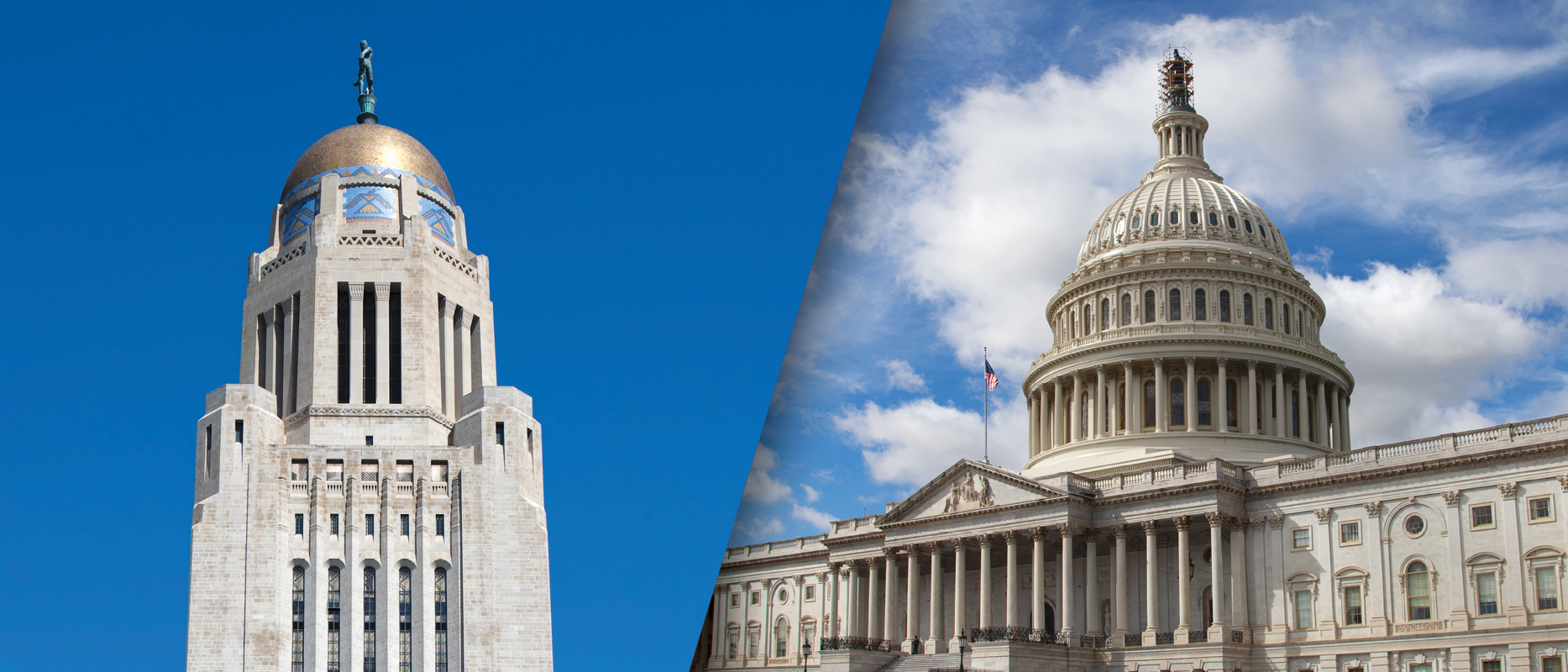
What’s Ahead in the 2026 Nebraska Legislature
As Nebraska heads into a fast-paced, 60-day legislativesession beginning Jan. 7, Nebraska Farm Bureau is preparing for a session withtight timelines, budget pressures and policy decisions affecting Nebraskafarmers and ranchers. We sat down with Bruce Rieker, senior director of state legislativeaffairs, and Elisabeth Hurst, director of state legislative affairs, to discusskey issues on Nebraska Farm Bureau’s priority list, from property taxes tolivestock development.
Q1. This is ashorter 60-day session. What realistically can be accomplished?
A1. Bruce: In a 60-day session, theLegislature’s primary obligation is to make the needed adjustments to the statebiennial budget. With an estimated $470 million shortfall for the current biennium,lawmakers will have to make necessary changes to ensure the budget is balanced.Beyond that, the speaker hasindicated he will only schedule bills for floor debate that have beenprioritized by senators, committees and the speaker, giving preference to billsadvanced to floor debate with a unanimous vote of the committee, followed bythose with a unanimous vote except absences and then those with no dissentingvotes when advanced to the floor.
Q2. As the 2026 legislative sessionbegins, what are the top priorities for Nebraska Farm Bureau?
A2. Elisabeth: You’re going to see many of the same keyissues from last session return: ag data privacy, livestock development andexpansion, and property taxes. Strong interest continues to grow in addressinghow producers’ data is collected, used and protected. The Nebraska LivestockBrand Act will also return in an updated version. Also, the perennial quest to slowthe growth of property taxes will be front and center for many legislators.
Q3. Property tax relief remains a topconcern for farmers and ranchers. What realistic progress can be made thissession?
A4. Bruce: With limited statedollars available, this year will be less about adding more tax credits andmore about slowing the growth of property taxes. That means making difficultdecisions, such as putting guardrails in place on how much property taxes cangrow while still protecting local control. The Legislature will see assortedoptions that can achieve what needs to be done. The real test will be whetherthere are 33 senators who can agree on the best option.
Q5. Whatopportunities exist to expand Nebraska’s livestock sector and add value to agproducts here at home?
A5. Elisabeth: Helping producers navigate planningand zoning is a major opportunity. Ensuring regulations are appropriate,protective of natural resources but not burdensome, is key. The goal is tosupport diversification, expansion and a strong return on investment forproducers across the livestock sector.
Q6. Ag data privacy has surfaced as a newpriority. What does that look like?
A6. Bruce: It’s an enormous issue. Data generatedon the farm, from equipment, crops, livestock or production practices, needs tobe protected. We believe anyone who possesses farm-originated data should havea responsibility to handle it responsibly. They cannot use it for their owngain without the producer’s permission, and they must protect it from misuse.The gravity of this matter is huge, and it will not be resolved in one session.Hopefully, we can put in place a solid foundation for us to build about infuture sessions.
Q7. How can FarmBureau members support these policy priorities during the 2026 session?
A7. Elisbeth: Members need to be conversant inthese issues and talk directly with decision-makers. Member engagement is howour policy agenda moves forward. Policymakers must hear how these decisionsaffect producers’ livelihoods, local economies and the state’s food productionsystem. Engaging at every level is essential. That includes meeting withsenators, participating in local Farm Bureau events, attending annual meetingsand staying involved. When members speak up, it makes a real difference.
With a tight session ahead, filled with major budgetdecisions and high priorities, Nebraska Farm Bureau remains focused onprotecting and serving the farmers and ranchers within our state.
Nebraska Agriculture Prepares for a Critical 2026 Congressional Session
As Nebraska agriculture looks ahead to another year infederal policymaking, we sat down with Jordan Dux, senior director of national affairs,to discuss what farmers and ranchers across the state can expect from Washingtonin 2026. From the impacts of last year’s One Big Beautiful Bill to the ongoingdebate surrounding the Farm Bill, international trade, taxes and regulatorychallenges, Dux offers Nebraska Farm Bureau members insight into where nationalpolicy may be headed and what it means for agriculture across the state.
Q1. What was the largest legislativeaccomplishment passed in 2025 that will impact farmers and ranchers in 2026?
A1. The passage of the One Big BeautifulBill (OBBB) in the summer of 2025 will have long-lasting impacts on virtuallyevery American citizen. As I often tell members, working on expiring federaltax-code legislation is tough as you’re just continuing on with tax rates asthey are. However, extending the tax rates and exemptions included in the TaxCuts and Jobs Act of 2017, which the OBBB did, prevented the largest taxincrease in our nation’s history. Besides a continuation of current federalincome tax rates, the legislation also increased the federal estate taxexemption, made permanent bonus depreciation at 100% (for purchases made afterJan. 19, 2025) and made permanent other important pieces of the tax code whichwere set to expire in 2025, including 199A and federal estate taxes. Outsideof taxes, the bill also included substantial improvements to the Farm Bill suchas increases in reference prices for PLC and ARC, higher subsidies for cropinsurance and needed investments in federal agricultural trade promotionprograms.
Q2. Speaking of the Farm Bill, obviouslysome of it was included in the OBBB, but will Congress need to address it in2026?
A2. While many needed improvements weremade to some of the programs typically discussed in relation to the Farm Bill,Congress still passed a needed extension of the bill to get us into 2026. Thereare still several programs that will need to be funded again next year that weplan to support. It is also important to remember that farm program paymentsfor the 2025 crop through ARC and PLC, the main Farm Bill safety-net programs,will be paid out in October of 2026. Unfortunately, it will take nearly a yearfor farmers to actually see the improvements made through the OBBB to thoseprograms. I should also note that we remain committed to passing a fix toCalifornia’s Proposition 12 and Massachusetts Question #3, which placedburdensome animal welfare standards on meat products coming into theirrespective states. Whether it be through the Farm Bill or another piece oflegislation, we plan on again pushing for a fix throughout 2026.
Q3. What are the other federal policypriorities for Nebraska agriculture heading into 2026?
A3. At the top of our list remains ourpledge to keep working to grow demand both internationally and domestically forNebraska agricultural products. We plan to continue to push the TrumpAdministration to both find new international markets and enforce existingtrade deals, both old and new. On the domestic front, securing passage ofyear-round E15, another top legislative priority, will help boost domestic corndemand and provide regulatory certainty for the ethanol sector. Lastly, we planto be very busy on the regulatory front throughout 2026. From finalizing a new WOTUSrule and implementing new pesticide regulations to continuing to work with USDAto ensure a better market and regulatory environment for our nation’s livestockproducers, we plan to stay busy on regulatory issues.
As Congress prepares for a new year, Nebraska Farm Bureauremains focused on ensuring that Nebraska’s farmers and ranchers have a strongvoice in Washington. Nebraska Farm Bureau remains committed to ensuring soundagricultural policy remains a priority in our nation’s capital.